













Belgium’s federal government is under mounting pressure to find nearly €5 billion in additional savings by 2029, as new projections reveal a significantly larger budget gap than
previously acknowledged. The findings raise fresh concerns about the country’s fiscal trajectory amid economic uncertainty and geopolitical tensions.
A report from the national monitoring committee—traditionally the starting point for Belgium’s annual budget review—indicates that the government must secure €4.9 billion in extra savings to comply with European fiscal rules. This exceeds earlier estimates by Prime Minister Bart De Wever, who had suggested a shortfall of €3 to €4 billion.
The situation could worsen further, with analysts warning that the ongoing Iran conflict may dampen economic growth and deepen the fiscal gap.
Budget review begins amid ‘grim’ outlook
Belgium’s budget minister Vincent Van Peteghem confirmed that formal budget review talks are set to begin immediately, with technical working groups already preparing to assess the numbers at cabinet level.
Those numbers paint a troubling picture. By the end of its term, the current government must deliver savings equivalent to 0.67% of GDP to meet EU spending standards—translating into the €4.9 billion adjustment.
This figure does not yet factor in external economic shocks, including rising energy costs or slower global growth linked to geopolitical instability.
Deficit and debt continue to rise
Belgium’s fiscal position has deteriorated further in 2025, with the deficit climbing to around 3.8% of GDP, up from 3.7%. The increase is partly attributed to delays in implementing key policy measures, including VAT reforms, alongside a €500 million shortfall in tax revenues.
Additionally, the government faces an immediate €1.4 billion gap this year due to earlier budget commitments falling behind schedule.
Public debt levels remain a major concern, adding to warnings that Belgium’s current fiscal path may be unsustainable without structural reforms.
Calls for flexibility from Europe
Amid the tightening fiscal outlook, Conner Rousseau, leader of the Flemish socialist party Vooruit, is urging the European Union to show flexibility.
He argues that existing EU budget rules include provisions for exceptional circumstances and should be activated in response to current global crises. According to Rousseau, such measures should extend beyond defense spending to include broader economic support for households and businesses.
He also advocates for increased joint European investment in energy infrastructure and industrial innovation, including cross-border power grids, battery storage, and offshore energy projects.
Push to revive pandemic-era support tool
Rousseau further called for the reactivation of SURE, a financial instrument introduced during the COVID-19 pandemic to support temporary unemployment schemes across EU member states.
He highlighted its past success, noting that the program helped safeguard millions of jobs and businesses, and argued it could once again provide crucial economic stability without placing additional financial burdens on member states.
A defining fiscal challenge ahead
As Belgium enters a critical phase of budget negotiations, the government faces a delicate balancing act: meeting strict European fiscal requirements while navigating economic headwinds and political pressure for increased public investment.
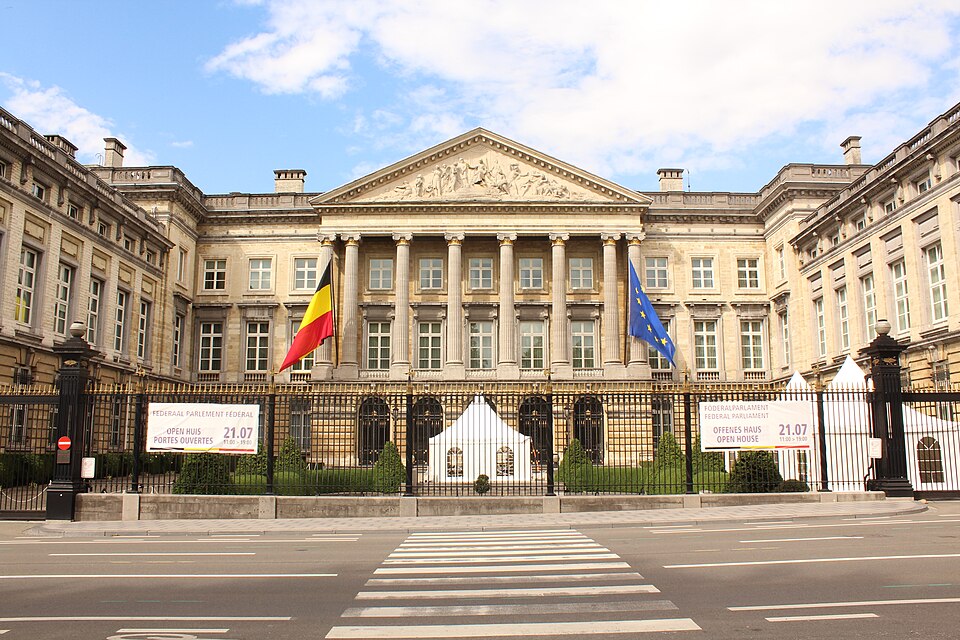
With the gap larger than expected and external risks mounting, the coming months are likely to define the country’s economic direction for years to come. Photo by Theedi, Wikimedia commons.