




Latest News

Nearly half of Europeans faced hostile online content in 2025, EU survey finds

Nearly half of Europeans faced hostile online content in 2025, EU survey finds Nearly half of Europeans faced hostile online content in 2025, EU survey finds
  A 2025 EU-wide survey shows that hostile and degrading content remains a widespread part of the online experience across Europe. On average,...
Read More...

EU Commission welcomes Council of Europe migration declaration, citing shared human rights approach

EU Commission welcomes Council of Europe migration declaration, citing shared human rights approach EU Commission welcomes Council of Europe migration declaration, citing shared human rights approach
  The European Commission has welcomed a new political declaration on migration adopted by the Council of Europe at a ministerial conference...
Read More...

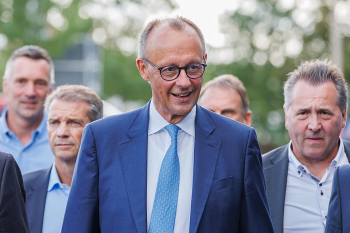
Merz pushes EU budget shake-up ahead of clash over spending priorities

Merz pushes EU budget shake-up ahead of clash over spending priorities Merz pushes EU budget shake-up ahead of clash over spending priorities
  German Chancellor Friedrich Merz has called for a sweeping overhaul of the European Union’s budget framework, arguing that the bloc...
Read More...

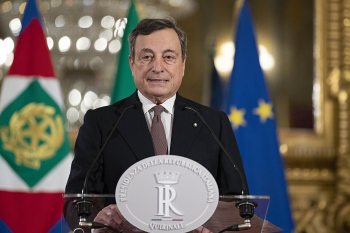
Draghi urges stronger Europe as U.S. ties grow more uncertain

Draghi urges stronger Europe as U.S. ties grow more uncertain Draghi urges stronger Europe as U.S. ties grow more uncertain
  Former European Central Bank President and former Italian Prime Minister Mario Draghi called on the European Union to take a firmer stance...
Read More...

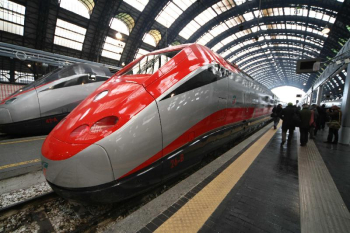
EU rail travel hits 8.7 billion journeys in 2024 as Germany and France lead demand

EU rail travel hits 8.7 billion journeys in 2024 as Germany and France lead demand EU rail travel hits 8.7 billion journeys in 2024 as Germany and France lead demand
  Rail travel across the European Union reached new heights in 2024, with passengers making 8.7 billion train journeys and covering a combined...
Read More...

Ukrainian refugees increasingly choosing to build new lives in the Netherlands, study shows

Ukrainian refugees increasingly choosing to build new lives in the Netherlands, study shows Ukrainian refugees increasingly choosing to build new lives in the Netherlands, study shows
  A growing majority of Ukrainian refugees in the Netherlands are no longer planning to return home, even if the war ends and conditions...
Read More...

Belgian military recruitment reaches highest level in five years

Belgian military recruitment reaches highest level in five years Belgian military recruitment reaches highest level in five years
  Belgium’s armed forces recruited nearly 3,000 professional soldiers in 2025, marking the country’s strongest military intake in five...
Read More...

EU unveils Global health Resilience Initiative to strengthen pandemic preparedness

EU unveils Global health Resilience Initiative to strengthen pandemic preparedness EU unveils Global health Resilience Initiative to strengthen pandemic preparedness
  The European Commission on Wednesday unveiled a new Global Health Resilience Initiative aimed at strengthening the European Union’s...
Read More...

Championing tomorrow: winners of the 2026 European Charlemagne Youth Prize revealed

Championing tomorrow: winners of the 2026 European Charlemagne Youth Prize revealed Championing tomorrow: winners of the 2026 European Charlemagne Youth Prize revealed
  The future of European democracy took center stage this Tuesday as three trailblazing initiatives from Estonia, France, and Spain were...
Read More...

Must Read

Most Popular Stories

VIDEO AND audio news:

Features, views, analysis

business

Latest News

Nearly half of Europeans faced hostile online content in 2025, EU survey finds

Nearly half of Europeans faced hostile online content in 2025, EU survey finds Nearly half of Europeans faced hostile online content in 2025, EU survey finds
  A 2025 EU-wide survey shows that hostile and degrading content remains a widespread part of the online experience across Europe. On average,...
Read More...

EU Commission welcomes Council of Europe migration declaration, citing shared human rights approach

EU Commission welcomes Council of Europe migration declaration, citing shared human rights approach EU Commission welcomes Council of Europe migration declaration, citing shared human rights approach
  The European Commission has welcomed a new political declaration on migration adopted by the Council of Europe at a ministerial conference...
Read More...

Merz pushes EU budget shake-up ahead of clash over spending priorities

Merz pushes EU budget shake-up ahead of clash over spending priorities Merz pushes EU budget shake-up ahead of clash over spending priorities
  German Chancellor Friedrich Merz has called for a sweeping overhaul of the European Union’s budget framework, arguing that the bloc...
Read More...

Draghi urges stronger Europe as U.S. ties grow more uncertain

Draghi urges stronger Europe as U.S. ties grow more uncertain Draghi urges stronger Europe as U.S. ties grow more uncertain
  Former European Central Bank President and former Italian Prime Minister Mario Draghi called on the European Union to take a firmer stance...
Read More...

EU rail travel hits 8.7 billion journeys in 2024 as Germany and France lead demand

EU rail travel hits 8.7 billion journeys in 2024 as Germany and France lead demand EU rail travel hits 8.7 billion journeys in 2024 as Germany and France lead demand
  Rail travel across the European Union reached new heights in 2024, with passengers making 8.7 billion train journeys and covering a combined...
Read More...

Ukrainian refugees increasingly choosing to build new lives in the Netherlands, study shows

Ukrainian refugees increasingly choosing to build new lives in the Netherlands, study shows Ukrainian refugees increasingly choosing to build new lives in the Netherlands, study shows
  A growing majority of Ukrainian refugees in the Netherlands are no longer planning to return home, even if the war ends and conditions...
Read More...

Belgian military recruitment reaches highest level in five years

Belgian military recruitment reaches highest level in five years Belgian military recruitment reaches highest level in five years
  Belgium’s armed forces recruited nearly 3,000 professional soldiers in 2025, marking the country’s strongest military intake in five...
Read More...

EU unveils Global health Resilience Initiative to strengthen pandemic preparedness

EU unveils Global health Resilience Initiative to strengthen pandemic preparedness EU unveils Global health Resilience Initiative to strengthen pandemic preparedness
  The European Commission on Wednesday unveiled a new Global Health Resilience Initiative aimed at strengthening the European Union’s...
Read More...

Championing tomorrow: winners of the 2026 European Charlemagne Youth Prize revealed

Championing tomorrow: winners of the 2026 European Charlemagne Youth Prize revealed Championing tomorrow: winners of the 2026 European Charlemagne Youth Prize revealed
  The future of European democracy took center stage this Tuesday as three trailblazing initiatives from Estonia, France, and Spain were...
Read More...

Must Read

Most Popular Stories


Labour costs across the European Union continued their steady rise in 2025, reflecting ongoing economic pressure, wage growth, and evolving labour policies across the bloc.

According to the latest data from Eurostat, average hourly labour costs reached €34.9 across the EU, up from €33.5 in 2024. In the euro area, the figure climbed to €38.2, compared with €36.8 the previous year.

Despite this overall increase, the gap between member states remains striking. At the lower end of the scale, Bulgaria recorded the cheapest labour at just €12 per hour, followed by Romania (€13.6) and Hungary (€15.2). On the opposite end, Luxembourg stood out with the highest labour costs at €56.8 per hour, ahead of Denmark (€51.7) and the Netherlands (€47.9).

These disparities underline the persistent economic imbalance within the EU, where wage levels and productivity continue to differ widely between eastern and western member states.

Labour costs are made up of two main elements: wages and salaries, and so-called “non-wage costs” such as employers’ social contributions. In 2025, non-wage costs accounted for nearly a quarter of total labour expenses—24.8% in the EU and 25.6% in the euro area.

However, here too differences are pronounced. Romania (4.8%), Lithuania (5.5%) and Malta (5.8%) reported the lowest shares of non-wage costs, while France (32.3%), Sweden (31.7%) and Slovakia (28.6%) recorded the highest. This reflects varying national approaches to taxation, social security systems, and employer obligations.

Overall, labour costs rose by 4.1% across the EU in 2025, with slightly lower growth of 3.8% in the euro area. Every eurozone country saw increases except Malta, where costs dipped marginally by 0.5%.

The fastest growth was observed in Central and Eastern Europe, with Bulgaria (+13.1%), Croatia (+11.6%), Slovenia (+9.3%) and Lithuania (+9.2%) leading the way. In contrast, larger economies such as France (+2.0%) and Italy (+3.2%) recorded more modest increases.

Outside the euro area, labour costs rose in all countries when measured in national currencies. Romania (+10.6%), Hungary (+8.9%) and Poland (+8.8%) saw the strongest growth, while Denmark recorded the smallest increase at 3.0%.

EU labour policy context

The rise in labour costs is closely tied to broader EU labour policy, which in recent years has focused on balancing competitiveness with social protection.

A key development has been the EU Minimum Wage Directive, aimed at ensuring fair wages across member states. While it does not impose a single EU-wide minimum wage, it encourages countries to set wages at adequate levels—often benchmarked at around 60% of median income.

Additionally, the EU has strengthened workers’ rights through initiatives such as:

- Improved rules on transparent and predictable working conditions

- Expansion of social protections for platform and gig economy workers

- Policies promoting work-life balance, including parental leave standards

At the same time, the European Commission has emphasized productivity growth and skills development to justify rising wages without undermining competitiveness. Funding instruments like the European Social Fund Plus continue to support job creation, training, and labour market inclusion.

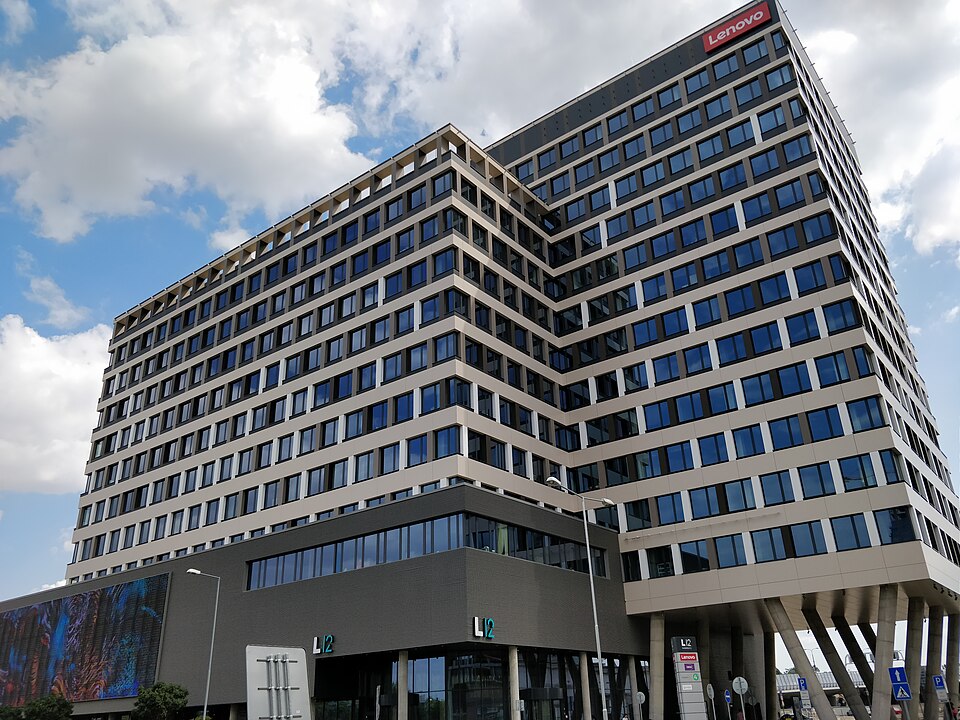
The challenge for policymakers remains navigating inflation, labour shortages, and demographic shifts—especially in ageing societies—while keeping European businesses globally competitive. Photo by Wizzard, Wikimedia commons.

deneme