





Latest News

Three in four young Europeans have basic digital skills, EU data shows

Three in four young Europeans have basic digital skills, EU data shows Three in four young Europeans have basic digital skills, EU data shows
Nearly three-quarters of young people across the European Union have at least basic digital skills, according to new figures for 2025, although...
Read More...

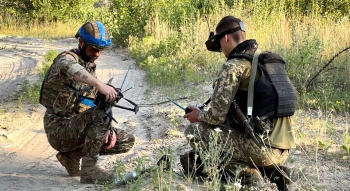
EU and Ukraine launch drone alliance to speed up defence technology development

EU and Ukraine launch drone alliance to speed up defence technology development EU and Ukraine launch drone alliance to speed up defence technology development
The European Union has formally launched the EU-Ukraine Drone Alliance, a new partnership aimed at accelerating the development and production...
Read More...

EU has fewer judges than a decade ago, with sharp differences between member states

EU has fewer judges than a decade ago, with sharp differences between member states EU has fewer judges than a decade ago, with sharp differences between member states
  The number of professional judges across the European Union has fallen over the past decade, according to new figures, although the picture...
Read More...

EU trade scheme delivered €5bn in tariff savings for developing countries, report says

EU trade scheme delivered €5bn in tariff savings for developing countries, report says EU trade scheme delivered €5bn in tariff savings for developing countries, report says
  The European Union's trade preference programme for developing countries continued to boost exports, support economic growth and encourage...
Read More...

EU opens prestigious Blue Book traineeships to vocational graduates

EU opens prestigious Blue Book traineeships to vocational graduates EU opens prestigious Blue Book traineeships to vocational graduates
  The European Commission has widened access to its flagship Blue Book traineeship programme, allowing graduates from vocational education...
Read More...

EU workers expected to spend longer in employment as average working life reaches 37.5 years

EU workers expected to spend longer in employment as average working life reaches 37.5 years EU workers expected to spend longer in employment as average working life reaches 37.5 years
  People across the European Union are expected to spend more time in the workforce than ever before, with the average working life reaching...
Read More...

EU asylum applications fall by 11% as Venezuelans become largest group of new applicants

EU asylum applications fall by 11% as Venezuelans become largest group of new applicants EU asylum applications fall by 11% as Venezuelans become largest group of new applicants
  The number of people applying for asylum in the European Union fell by 11% in April compared with the same month last year, according...
Read More...

German court jails three more suspects in €50m EU VAT fraud investigation

German court jails three more suspects in €50m EU VAT fraud investigation German court jails three more suspects in €50m EU VAT fraud investigation
  A German court has convicted three more people linked to a major VAT fraud network accused of hiding more than €50 million in tax losses...
Read More...

EU fund to help nearly 2,000 workers hit by job losses in Belgium and Spain

EU fund to help nearly 2,000 workers hit by job losses in Belgium and Spain EU fund to help nearly 2,000 workers hit by job losses in Belgium and Spain
  The European Commission has proposed a €6.5 million support package to help almost 2,000 workers affected by major job losses in Belgium...
Read More...

EU approves €41m Greek aid package to help farmers cope with fertiliser price surge

 EU approves €41m Greek aid package to help farmers cope with fertiliser price surge EU approves €41m Greek aid package to help farmers cope with fertiliser price surge
The European Commission has approved a €41 million support scheme for Greek agricultural businesses hit by rising fertiliser costs linked...
Read More...

Must Read

Most Popular Stories

VIDEO AND audio news:

Features, views, analysis

business

Latest News

Three in four young Europeans have basic digital skills, EU data shows

Three in four young Europeans have basic digital skills, EU data shows Three in four young Europeans have basic digital skills, EU data shows
Nearly three-quarters of young people across the European Union have at least basic digital skills, according to new figures for 2025, although...
Read More...

EU and Ukraine launch drone alliance to speed up defence technology development

EU and Ukraine launch drone alliance to speed up defence technology development EU and Ukraine launch drone alliance to speed up defence technology development
The European Union has formally launched the EU-Ukraine Drone Alliance, a new partnership aimed at accelerating the development and production...
Read More...

EU has fewer judges than a decade ago, with sharp differences between member states

EU has fewer judges than a decade ago, with sharp differences between member states EU has fewer judges than a decade ago, with sharp differences between member states
  The number of professional judges across the European Union has fallen over the past decade, according to new figures, although the picture...
Read More...

EU trade scheme delivered €5bn in tariff savings for developing countries, report says

EU trade scheme delivered €5bn in tariff savings for developing countries, report says EU trade scheme delivered €5bn in tariff savings for developing countries, report says
  The European Union's trade preference programme for developing countries continued to boost exports, support economic growth and encourage...
Read More...

EU opens prestigious Blue Book traineeships to vocational graduates

EU opens prestigious Blue Book traineeships to vocational graduates EU opens prestigious Blue Book traineeships to vocational graduates
  The European Commission has widened access to its flagship Blue Book traineeship programme, allowing graduates from vocational education...
Read More...

EU workers expected to spend longer in employment as average working life reaches 37.5 years

EU workers expected to spend longer in employment as average working life reaches 37.5 years EU workers expected to spend longer in employment as average working life reaches 37.5 years
  People across the European Union are expected to spend more time in the workforce than ever before, with the average working life reaching...
Read More...

EU asylum applications fall by 11% as Venezuelans become largest group of new applicants

EU asylum applications fall by 11% as Venezuelans become largest group of new applicants EU asylum applications fall by 11% as Venezuelans become largest group of new applicants
  The number of people applying for asylum in the European Union fell by 11% in April compared with the same month last year, according...
Read More...

German court jails three more suspects in €50m EU VAT fraud investigation

German court jails three more suspects in €50m EU VAT fraud investigation German court jails three more suspects in €50m EU VAT fraud investigation
  A German court has convicted three more people linked to a major VAT fraud network accused of hiding more than €50 million in tax losses...
Read More...

EU fund to help nearly 2,000 workers hit by job losses in Belgium and Spain

EU fund to help nearly 2,000 workers hit by job losses in Belgium and Spain EU fund to help nearly 2,000 workers hit by job losses in Belgium and Spain
  The European Commission has proposed a €6.5 million support package to help almost 2,000 workers affected by major job losses in Belgium...
Read More...

EU approves €41m Greek aid package to help farmers cope with fertiliser price surge

 EU approves €41m Greek aid package to help farmers cope with fertiliser price surge EU approves €41m Greek aid package to help farmers cope with fertiliser price surge
The European Commission has approved a €41 million support scheme for Greek agricultural businesses hit by rising fertiliser costs linked...
Read More...

Must Read

Most Popular Stories


Dutch authorities are facing mounting challenges in tackling organized crime networks that increasingly exploit legitimate businesses as fronts for illegal operations. According to

recent reporting, criminals are embedding themselves within everyday commercial environments, making detection more complex and enforcement more difficult.

Between 2020 and 2024, one such network operated an underground banking system out of a small grocery store in Rotterdam, moving more than €51 million through the business. In a separate case in Utrecht, criminal groups were observed infiltrating ordinary retail spaces along busy shopping streets, blending seamlessly into the legal economy.

The scale of suspicious financial activity has surged. Over the past five years, the Financial Intelligence Unit (FIU) recorded nearly 600,000 unusual transactions, with a combined value exceeding €100 billion—more than double the total from the previous five-year period. This sharp increase highlights how rapidly financial crime is evolving in the Netherlands.

Concerns are also growing around the misuse of newly registered companies. Data from the national business register shows that approximately 17,000 businesses were flagged as suspicious over the past five years. In 2024 alone, 3,728 newly established companies were identified as potentially linked to criminal activity, marking a notable rise compared to the previous year.

Despite ongoing discussions between the business register and the Ministry of Economic Affairs, officials acknowledge that tangible progress in preventing fraudulent company formations remains limited. Experts warn that the ease of registering a business continues to be a major vulnerability.

Criminologists describe company registration as a “golden ticket” for organized crime. Establishing a business provides immediate access to financial systems, including bank accounts, while also offering a veneer of legitimacy. Beyond financial advantages, these entities can be used to deceive suppliers, intercept goods, or facilitate large-scale fraud.

There are also security concerns related to procurement. Criminals can use registered businesses to acquire materials—such as chemicals or laboratory equipment—that might otherwise trigger suspicion if purchased by private individuals. These goods can then be diverted into illegal activities, including drug production.

The Rotterdam case illustrates how ordinary businesses can become central nodes in criminal networks. Police surveillance revealed individuals entering the store with large bags and leaving without making purchases. A subsequent raid uncovered a money-counting machine, confirming suspicions that the shop was functioning as an underground financial hub. Authorities linked the operation to money laundering tied to cocaine trafficking. Earlier this year, those involved were sentenced to prison terms ranging from four to ten years, alongside significant financial penalties.

Importantly, experts stress that not all cases involve criminals setting up their own companies. In many instances, existing businesses are infiltrated, manipulated, or even coerced into cooperation. This can happen without the owner’s knowledge, or under pressure from criminal groups seeking to avoid the risks associated with running their own enterprises.

Additional context: Dutch anti-crime efforts

The Netherlands has intensified its fight against organized crime in recent years, particularly through specialized units within the national police and public prosecution service. The Dutch approach combines financial intelligence, administrative controls, and traditional policing.

Key strategies include:

- Financial tracking and disruption: Authorities focus heavily on “following the money,” using FIU reports and banking data to identify criminal networks.

- Administrative enforcement: Local municipalities can shut down suspicious businesses, revoke licenses, or deny permits if criminal links are suspected.

- Specialized police units: Teams dedicated to tackling organized crime—especially drug trafficking and money laundering—work closely with tax authorities and international partners.

Public-private cooperation: Banks, notaries, and business registries are increasingly involved in identifying and reporting suspicious activity.

Despite these efforts, officials admit that criminals are adapting quickly, exploiting legal loopholes and the speed of digital business registration. The ongoing challenge for Dutch authorities is staying ahead of increasingly sophisticated networks that operate in the gray zone between legal and illegal economies. Photo by FaceMePLS from The Hague, The Netherlands, Wikimedia commons.