











The Parliamentary Assembly of the Council of Europe has renewed its call for stronger youth participation in democratic life, warning that Europe’s democratic future depends on
young people being recognised not just as voters or consultees, but as equal partners in decision-making.
The issue was at the centre of a debate titled “Strengthening democracies with young people”, led by Armenian parliamentarian Sona Ghazaryan (ALDE). Speaking ahead of the discussion, Ghazaryan and her colleagues stressed that meaningful youth engagement is essential for the renewal, resilience and legitimacy of democratic institutions across Europe.
In a resolution and accompanying recommendation adopted this week, Assembly members argued that youth participation must move beyond symbolic consultation. Instead, young people should share responsibility and have real influence over policies that shape their political, social, economic and cultural lives.
Despite progress in recent years, the Assembly acknowledged that youth participation remains uneven and fragmented across the continent. Many young people, it noted, feel excluded from democratic processes or see public institutions as distant and unrepresentative.
The resolution points to widening socio-economic inequalities as a key driver of this disengagement. Issues such as precarious employment, limited access to housing and education, and the shrinking of civic and cultural spaces are undermining young people’s trust in democratic systems, lawmakers warned.
At the same time, the Assembly welcomed several recent initiatives aimed at reversing this trend. These include the declaration adopted at the 10th Council of Europe Conference of Ministers responsible for youth and the newly introduced Reference Framework on a youth perspective. Together, they are seen as providing a clearer roadmap for embedding youth perspectives across all areas of policy and decision-making.
The Council of Europe’s long-standing co-management system, which brings young people directly into policy development, was praised as a model of good practice. The Assembly also highlighted the role of the European Youth Centres and the European Youth Foundation, describing them as concrete examples of effective youth participation in action. It further welcomed a proposal to explore the creation of a third European Youth Centre in the Black Sea region.
Looking ahead, parliamentarians were clear that the next step must be genuine power-sharing. Youth participation, they said, should no longer be limited to advisory roles but should translate into real influence over decisions. To achieve this, the Assembly called for transparent and accessible institutions, stronger accountability of authorities towards young people, and a renewed culture of trust between generations.
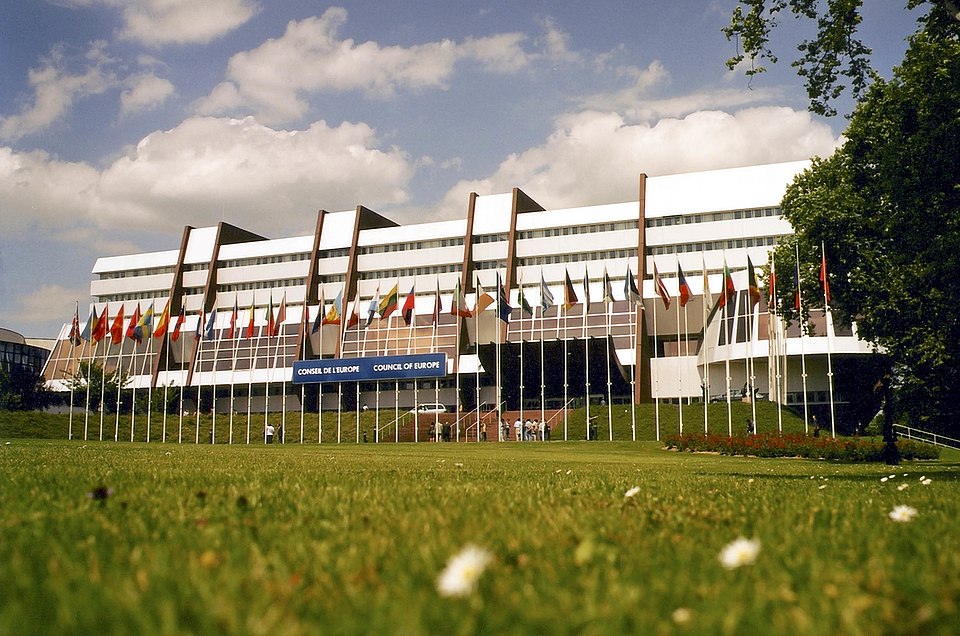
“Building democracy with young people,” the resolution concludes, “is not optional, but a democratic necessity.” Photo by Council of Europe, Wikimedia commons.