













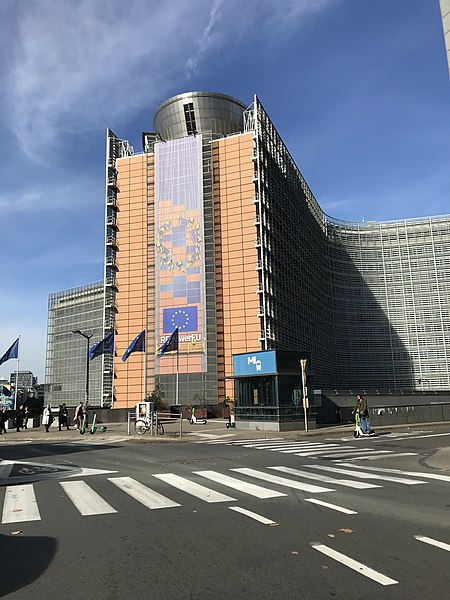
The European Commission has adopted the European Union’s first-ever Visa Strategy, marking a major shift in how the bloc manages travel, security and global mobility. The new
framework is designed to make EU visa policy more strategic, future-proof and aligned with Europe’s long-term economic and geopolitical interests.
At a time of rising global mobility, regional instability and growing geopolitical competition, the Commission says the EU needs a smarter and more coherent approach to visas—one that strengthens security while keeping Europe open to talent, tourism and business.
Four goals: security, growth, influence and efficiency
The Visa Strategy is built around four core objectives. First, it aims to make Europe safer by reinforcing the EU’s “first line of defence” through stronger security screening. Second, it seeks to boost prosperity and competitiveness by making it easier for travellers, professionals and innovators who contribute to the EU economy to enter and move within the bloc. Third, the strategy is designed to enhance the EU’s global influence by using visa policy as a strategic tool in foreign relations. Finally, it focuses on efficiency, modernising visa systems to make them faster, more digital and more user-friendly.
Alongside the strategy, the Commission has also adopted a Recommendation on attracting talent for innovation, underlining the EU’s ambition to compete globally for highly skilled workers, students, researchers and entrepreneurs.
Pillar one: strengthening EU security
Security sits at the heart of the new Visa Strategy. The Commission plans to modernise how visa-free access is granted to partner countries, introducing a new assessment framework with clear criteria by 2026. Existing visa-free regimes will be monitored more closely under a reinforced Visa Suspension Mechanism to prevent abuse and ensure ongoing compliance.
The EU also intends to sharpen its leverage through visa policy. This includes upgrading the current Article 25a mechanism, which allows targeted visa restrictions against countries that fail to cooperate on return and readmission of irregular migrants. New ad hoc visa measures could also be introduced to encourage cooperation on security and tackling illegal migration. These changes are expected as part of a broader revision of the EU Visa Code in 2026.
In response to hostile actions by third countries that threaten EU security, the Commission is considering targeted restrictive visa measures, including suspensions or refusals, in close consultation with Member States.
To combat fraud, the strategy also proposes stronger rules on travel document security, including harmonised EU-wide definitions and sanctions for document fraud.
Pillar two: boosting prosperity and competitiveness
Travel and mobility are a powerful engine of the European economy, with the Schengen area remaining the world’s most visited destination. The new Visa Strategy aims to make legitimate travel easier, faster and more predictable—while helping Europe stay competitive in the global race for talent.
A major focus is digitalisation. From late 2026, the European Travel Information and Authorisation System (ETIAS) will simplify pre-departure checks for visa-free travellers. At the same time, fully digital visa procedures will allow travellers who need a visa to complete the entire application process online.
The Commission also plans to expand the use of long-validity multiple-entry visas for trusted travellers, rewarding those with a strong travel history and supporting economic activity. For business travel, a common list of verified companies is foreseen to speed up procedures for applicants invited by trusted sponsors.
To attract talent, the EU will explore updates to existing rules for students, researchers and highly skilled workers, as well as a potential new legal framework tailored to startup founders, scale-up leaders and innovative entrepreneurs. Additional EU funding and dedicated European Legal Gateway Offices will help both employers and non-EU nationals navigate visa processes more easily.
Pillar three: modern tools for modern borders
Each year, millions of travellers cross the EU’s external borders, either on short-stay visas or visa-free entry. Managing this flow efficiently requires modern digital infrastructure.
By 2028, EU border and visa IT systems are expected to become fully interoperable, allowing authorities to check multiple databases through a single search. This will improve information-sharing, strengthen security checks and reduce the risk of visa abuse, while facilitating legitimate travel.
Attracting global talent for innovation
Complementing the Visa Strategy, the Commission’s Recommendation on attracting talent for innovation calls on Member States to make better use of existing tools to draw and retain global talent in sectors critical to Europe’s competitiveness and strategic autonomy.
The Recommendation encourages simpler and faster procedures for long-stay visas and residence permits, greater use of digital processes, fewer administrative requirements and shorter processing times. It also promotes smoother transitions from study or research into work or entrepreneurship, better mobility within the EU, and stronger coordination between national authorities, universities and research institutions.
This initiative supports broader EU priorities, including the “Choose Europe” agenda for research and innovation talent, the Union of Skills, and the EU Startup and Scaleup Strategy.
With this first-ever Visa Strategy, the Commission is signalling a clear message: Europe intends to remain open to the world—but on smarter, safer and more strategic terms.