















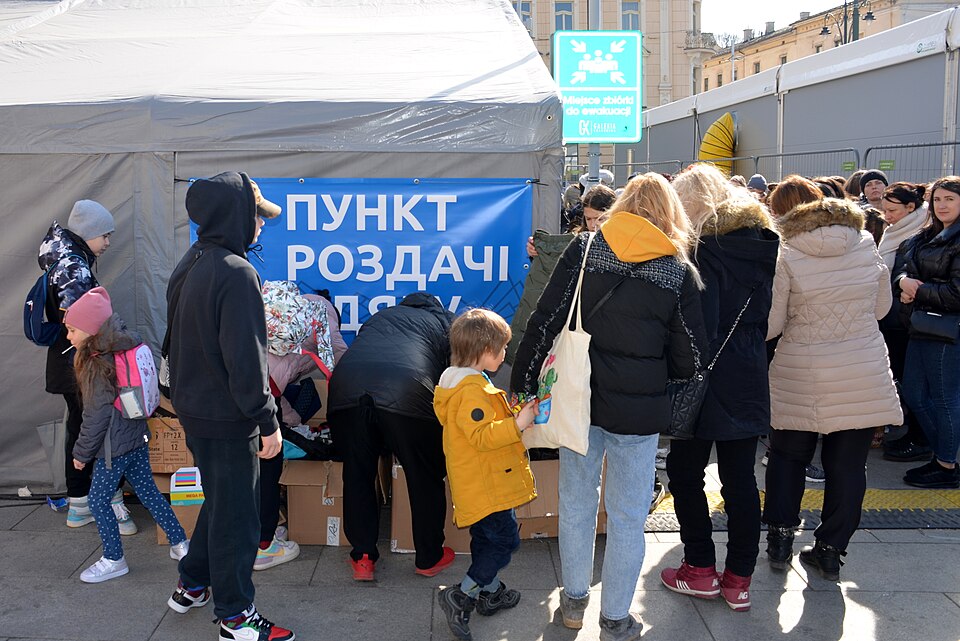
The number of Ukrainians and other non-EU citizens under temporary protection in the European Union fell to 4.33 million at the end of March 2026, marking a monthly decline of
nearly 69,000 people, according to newly released EU data.
Compared with February 2026, the total number of beneficiaries dropped by 68,980, or 1.6%, across the bloc.
Germany continued to host the largest share of people under temporary protection, with 1.27 million beneficiaries, accounting for 29.4% of the EU total. Poland followed with 961,405 people, or 22.2%, while Czechia hosted 379,820 beneficiaries, representing 8.8%.
Despite the overall decline, 14 EU member states recorded increases in the number of protected individuals. Germany posted the largest absolute rise, adding 7,480 people in March, followed by Spain (+2,665) and Romania (+2,125).
The sharpest decrease was registered in Italy, where the number of beneficiaries fell by 30,365, or 47.4%. EU officials attributed the drop to the simultaneous expiry of a large number of residence permits linked to the country’s annual renewal process. Czechia and Finland also reported notable declines, with decreases of 19,810 and 8,080 people respectively.
Relative to population size, Czechia hosted the highest number of temporary protection beneficiaries, with 34.8 per 1,000 inhabitants. Poland and Slovakia followed closely, with ratios of 26.3 and 26.2 respectively. The EU average stood at 9.6 per 1,000 people.
Ukrainian citizens accounted for more than 98.4% of all beneficiaries under the scheme. Adult women represented the largest demographic group at 43.3%, while minors made up 30.1% and adult men accounted for 26.6%.
The temporary protection mechanism was introduced under the EU’s March 2022 emergency decision following Russia’s full-scale invasion of Ukraine. In June 2025, the European Council agreed to extend the protection framework until 4 March 2027.
Photo by Silar, Wikimedia commons.