
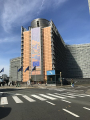












Germany is sharpening its foreign policy tools for an unsettled world. With a budget of around six billion euros for 2026, the Federal Foreign Office is
signalling continuity, resilience and a clear sense of responsibility amid mounting global crises.
Speaking during the Bundestag’s budget debate, Foreign Minister Wadephul underlined that the figures are about more than money. They reflect Germany’s commitment to freedom, security and prosperity as the guiding principles of its foreign policy—even at a time of fiscal pressure.
Crisis management as a central task
Geopolitical tensions are shaping almost every line of the 2026 budget. The war in Ukraine, instability in the Middle East and severe humanitarian crises across Africa continue to demand decisive action. Germany’s response, according to the Foreign Office, is to remain actively engaged in crisis prevention, humanitarian relief and long-term stabilisation.
Despite tighter financial conditions, Berlin wants to be seen as a dependable partner. The budget allocates 1.048 billion euros to humanitarian assistance, aimed at helping people caught in emergencies and easing acute suffering. This includes funding for mine clearance in conflict zones—often a prerequisite for reconstruction and the safe return of civilians.
Beyond immediate relief, 353 million euros are earmarked for stabilisation measures. These funds support peace mediation, the prevention of extremist violence, efforts against organised crime, security-sector reform, disarmament programmes and the strengthening of state institutions. Democracy, the rule of law and improved living conditions remain central objectives.
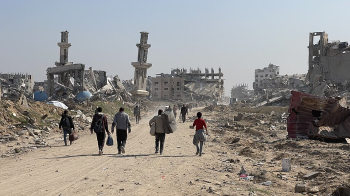
The Middle East, and Gaza in particular, remains a key focus. Germany is already delivering humanitarian aid and intends to continue pushing for Gaza’s reconstruction within the international community. The government is working with partners to implement a 20-point plan for Gaza and is backing the International Stabilization Force recently endorsed by the UN Security Council, with the aim of creating lasting stability.
Security and responsibility beyond Germany’s borders
Security policy remains a cornerstone of the 2026 budget. In response to growing threats to the international order—most notably Russia’s war of aggression against Ukraine—Germany has expanded both military and civilian support measures. The Enable and Enhance Initiative, jointly run by the Foreign Office and the Ministry of Defence, has been significantly strengthened.
In total, around 12 billion euros, including revenues and reflows, are allocated to military support for Ukraine. The message is clear: Germany is prepared to shoulder responsibility for security in Europe and beyond.
Flexibility is another priority. The budget allows funds to be reallocated at short notice so Germany can respond quickly to sudden crises, whether triggered by natural disasters or geopolitical shocks.
Culture, education and academic freedom
In an increasingly polarised world, the Foreign Office sees cultural and educational engagement as a form of strategic investment. Almost one billion euros are set aside for cultural relations and education policy in 2026.
German schools abroad and the Goethe-Institut continue to play a key role, acting as bridges between societies and promoting understanding of Germany’s values and interests. Support for institutions such as the German Academic Exchange Service (DAAD) and the Alexander von Humboldt Foundation reinforces Germany’s commitment to academic freedom and international exchange.
Skilled workers as an economic priority
Foreign policy is also closely linked to domestic economic needs. Addressing Germany’s shortage of skilled workers remains a priority in 2026. The Federal Agency for Foreign Affairs, which coordinates visa procedures for skilled workers, will receive an increased budget of 67.5 million euros.
The aim is to speed up visa processing and improve integration into the labour market, making Germany more attractive to international talent.
Capable diplomacy despite constraints
Even with staffing reductions, the Foreign Office insists it will remain fully operational. More than 12,000 employees at 225 missions abroad and at headquarters in Berlin will continue to implement Germany’s foreign policy worldwide.
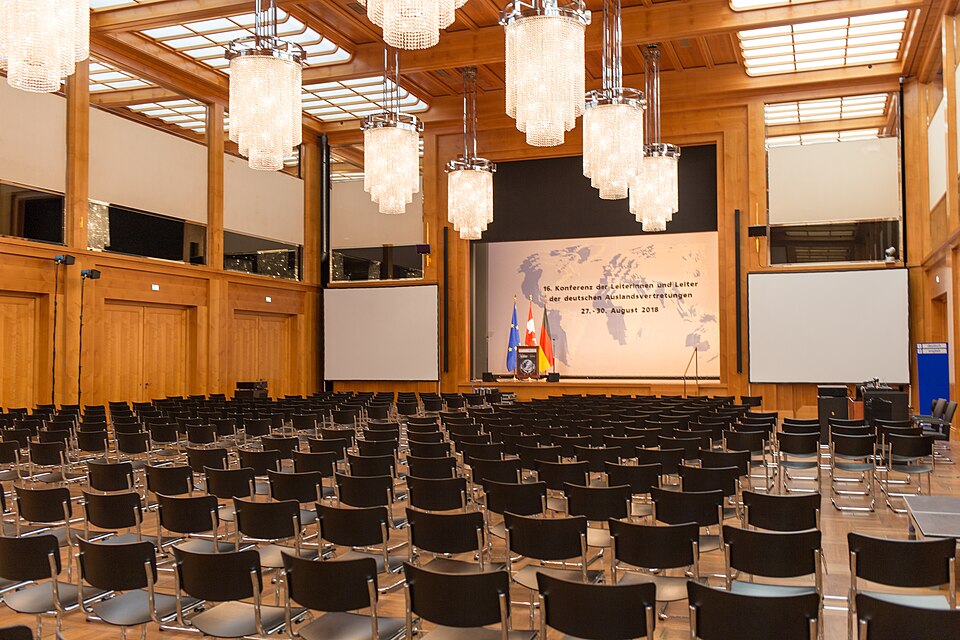
Taken together, the 2026 budget is designed to ensure that Germany remains an effective international actor. Through targeted spending on humanitarian aid, security, culture, education and skilled migration, Berlin is reaffirming its commitment to global stability and to the values that underpin its foreign policy—even in difficult times. Photo by GodeNehler, Wikimedia commons.