











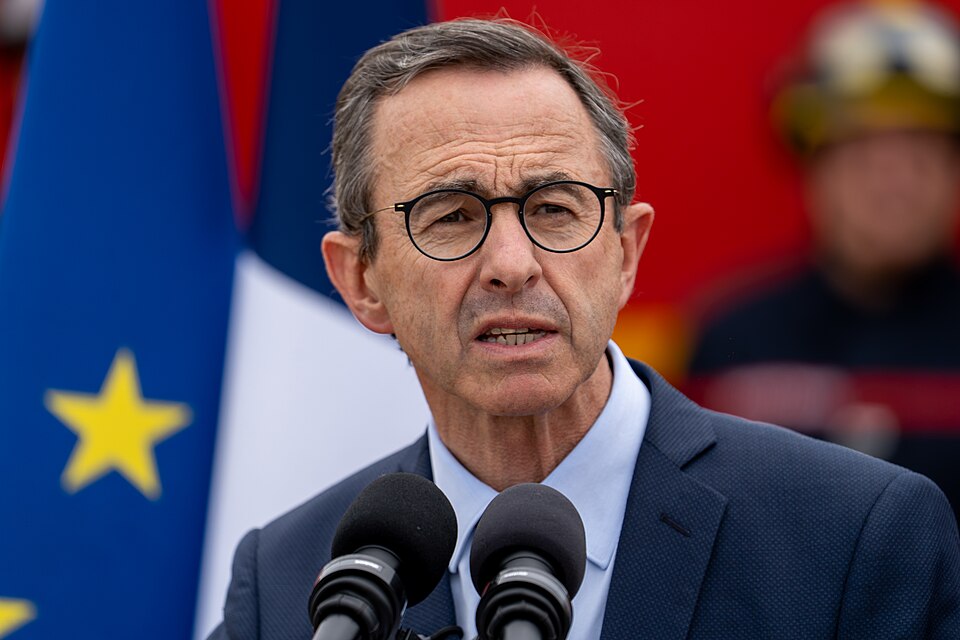
Bruno Retailleau, a veteran conservative figure and former French interior minister, has announced he will run in France’s 2027 presidential election,
adding another name to an already crowded field vying to succeed Emmanuel Macron.
In a video address posted on his social media accounts on Thursday, Retailleau struck a sombre tone, arguing that France has grown weaker in a world increasingly dominated by aggressive global powers. Without naming the president directly, he criticised what he called years of “technocratic excesses” that, in his view, have left the country vulnerable and adrift.
Positioning himself firmly on the law-and-order wing of the centre right, Retailleau promised a hard line on immigration and drug trafficking. He said he would seek to restore “order in the streets and at the borders,” including by using referendums to push through sweeping changes to immigration and criminal justice laws. “I will be the president of order, justice and French pride,” he declared.
Beyond security, Retailleau outlined an economic vision centred on re-industrialising France, alongside what he described as an “ecology of progress” — reframing environmental protection as compatible with growth and competitiveness.
A senator from the Vendée region in western France, the 65-year-old led the centre-right Republicans party and served as interior minister from 2024 to 2025. His time in government was turbulent. Initially appointed under Prime Minister Michel Barnier and later retained in François Bayrou’s administration, he resigned soon after Sébastien Lecornu became prime minister, citing frustration with other cabinet appointments. The episode, which also briefly destabilised Lecornu’s own position, bruised Retailleau’s political standing.
Early polling suggests a steep climb ahead. An Ifop survey published this week found that 69% of respondents believe Retailleau lacks the qualities needed to be president. Even so, his party’s sizeable bloc in parliament gives him leverage, particularly if he fails to reach the second round of voting.
That influence could prove crucial for other contenders, especially the far right. The National Rally, led by Marine Le Pen and her protégé Jordan Bardella, dominates opinion polls and has built much of its appeal on immigration and security — the very terrain Retailleau hopes to claim.
During his stint at the interior ministry, Retailleau pushed to accelerate deportations and intensify the fight against drug crime, but analysts say he may struggle to differentiate himself from a far right that already commands public attention on those issues.
Since leaving office, he has become an outspoken critic of the government, denouncing compromises made with Socialists to pass the 2026 budget and avoid a collapse of the administration. As the 2027 race begins to take shape, Retailleau is betting that voter fatigue with the political centre — and anxiety over security and sovereignty — will give his brand of conservatism a second wind. Photo by Anthonymontardyfr, Wikimedia commons.