














The dismissal of four long-serving employees at Le Soir this week has once again drawn attention to the growing financial crisis gripping Belgium’s
media sector. Most of the affected staff had worked at the French-language daily for more than 25 years, making the layoffs a stark symbol of how deep the problems now run.
Le Soir’s decision is far from an isolated case. Across the French-speaking media landscape, news organisations are tightening their belts. Television and news outlets such as BX1, TV Lux and LN24 have recently announced job cuts, while major broadcasters RTL and RTBF have ended collaborations with dozens of freelance journalists.
The pressure is just as intense in Flanders. Mediahuis, one of the region’s largest publishers, announced a temporary collective wage reduction of 2.78 per cent for 2026 after already laying off more than a dozen employees in 2025. Staff are being offered six extra days of leave as compensation. Public broadcaster BRUZZ also dismissed four full-time employees in November following Flemish government budget cuts, reduced work opportunities for freelancers and shut down its cultural magazine BRUZZ Select. Earlier this year, DPG Media laid off nine employees at Het Laatste Nieuws.
Rising costs and falling revenues
Several structural factors are fuelling the crisis. One major blow came with the end of federal subsidies for newspaper distribution via bpost. Distribution has largely shifted to private companies PPP and AMP, increasing costs for publishers while, in many cases, weakening delivery services for subscribers.
At the same time, traditional media outlets are losing advertising revenue to American tech giants such as Meta and Google. As audiences increasingly consume news online, advertisers are following them to the global platforms, which offer massive reach and sophisticated targeting. This shift has further eroded the income base of Belgian publishers.
The economic squeeze is reshaping the media landscape. Ownership is becoming increasingly concentrated in the hands of a few large media groups, reducing diversity and limiting editorial plurality. The consequences are particularly severe for freelance journalists, who often lack stable contracts or predictable income.
According to the Flemish Association of Journalists (VVJ), one in four recognised professional journalists and trainees now works as a freelancer — a figure that could rise further. The federal government’s expansion of the flexi-job system, which allows employees and retirees to earn extra income, has raised fresh concerns within the profession.
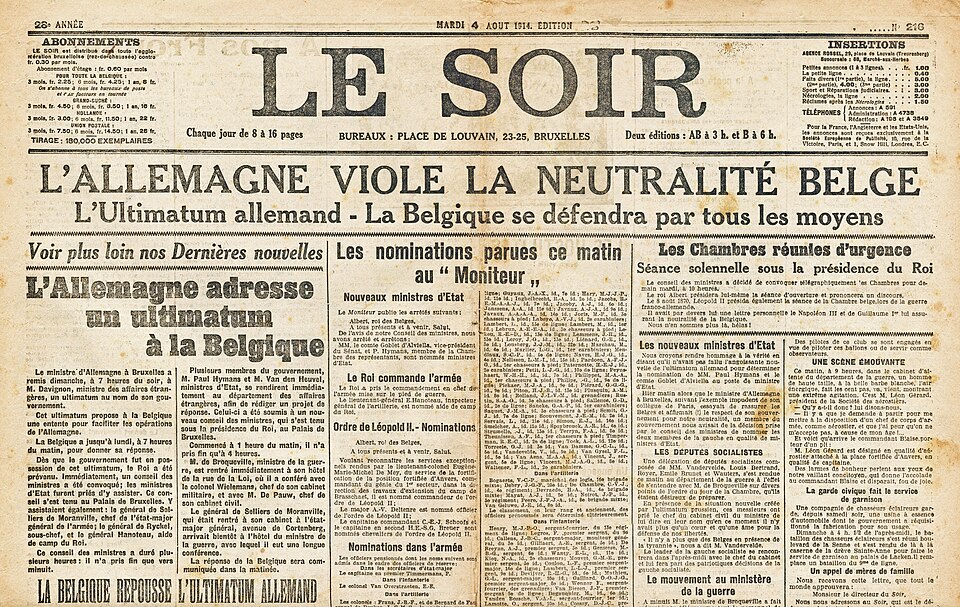
“Flexi-jobs in journalism will only reinforce this downward spiral,” the VVJ warned. “They risk undermining regular jobs and encouraging even more precarious forms of employment, at a time when the sector desperately needs stability, investment and recognition.” Photo by Newspaper -- scanned, optimized and uploaded by Marc Ryckaert, Wikimedia commons.