













Interest income generated from frozen Russian assets held by Euroclear declined sharply last year, falling by 26 per cent to around €5 billion, as lower interest rates weighed on
returns. The figures were released on Wednesday as part of the Belgian financial services group’s annual results.
The Brussels-based firm has been under intense political scrutiny in recent months amid EU discussions on whether profits from blocked Russian funds could be used directly to support Ukraine. That proposal ultimately failed to gain consensus, after Belgian Prime Minister Bart De Wever voiced strong opposition, citing risks to financial stability and the rule of law.
Instead, EU leaders agreed on an alternative plan to raise up to €90 billion through joint borrowing on financial markets to finance support for Ukraine.
Euroclear chief executive Valérie Urbain welcomed the decision, saying it provided clarity and safeguarded the integrity of the financial system. She stressed that Euroclear would continue to work closely with European policymakers to ensure sanctions are implemented in a way that preserves financial stability and legal certainty.
Euroclear plays a critical role in global finance, processing large volumes of transactions for investors, financial institutions and governments. The company, which describes itself as the “notary of the financial world,” is partly owned by the Belgian state, which holds about 12 per cent of its shares, alongside banks and other public bodies.
Despite the fall in interest income from frozen Russian assets, Euroclear’s overall financial performance improved. The firm reported a net profit of €1.112 billion in 2025, up from €1.038 billion the previous year.
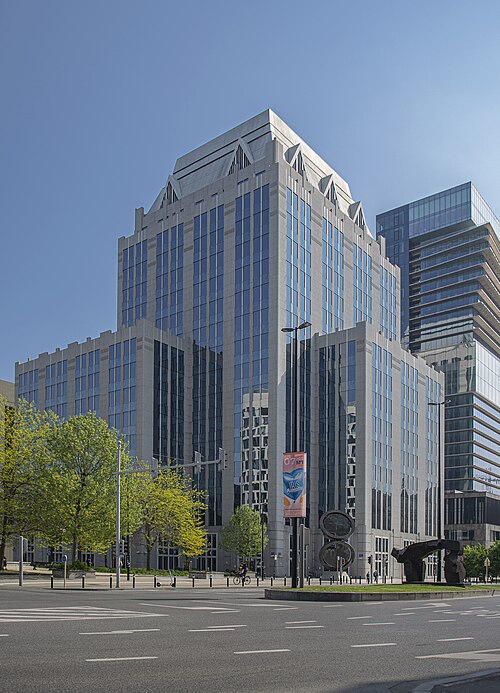
Russian cash, shares and bonds held by Euroclear have been frozen since Moscow’s invasion of Ukraine under international sanctions. Interest and dividends generated by these assets are placed in blocked accounts and reinvested. Most of the proceeds are earmarked for the EU’s Ukraine support fund, with contributions for the 2025 financial year expected to reach €3.3 billion. Photo by Marek Śliwecki, Wikimedia commons.